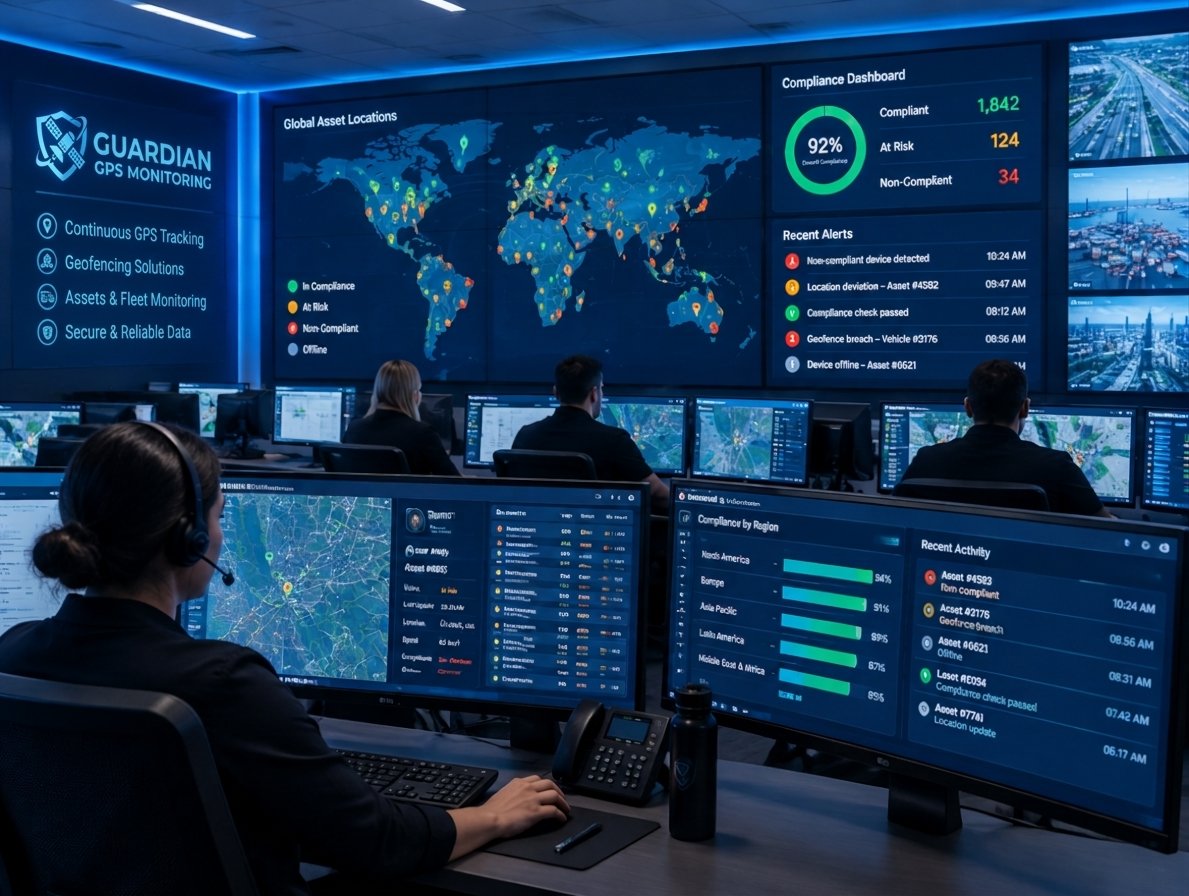
Ankle monitors, GPS watches, alcohol sensors and house arrest check-ins all report to the same place: our US-based monitoring center, staffed three shifts a day, 365 days a year. This is what happens in the minutes after a device raises an alert.
An alert lands with a person, not a queue
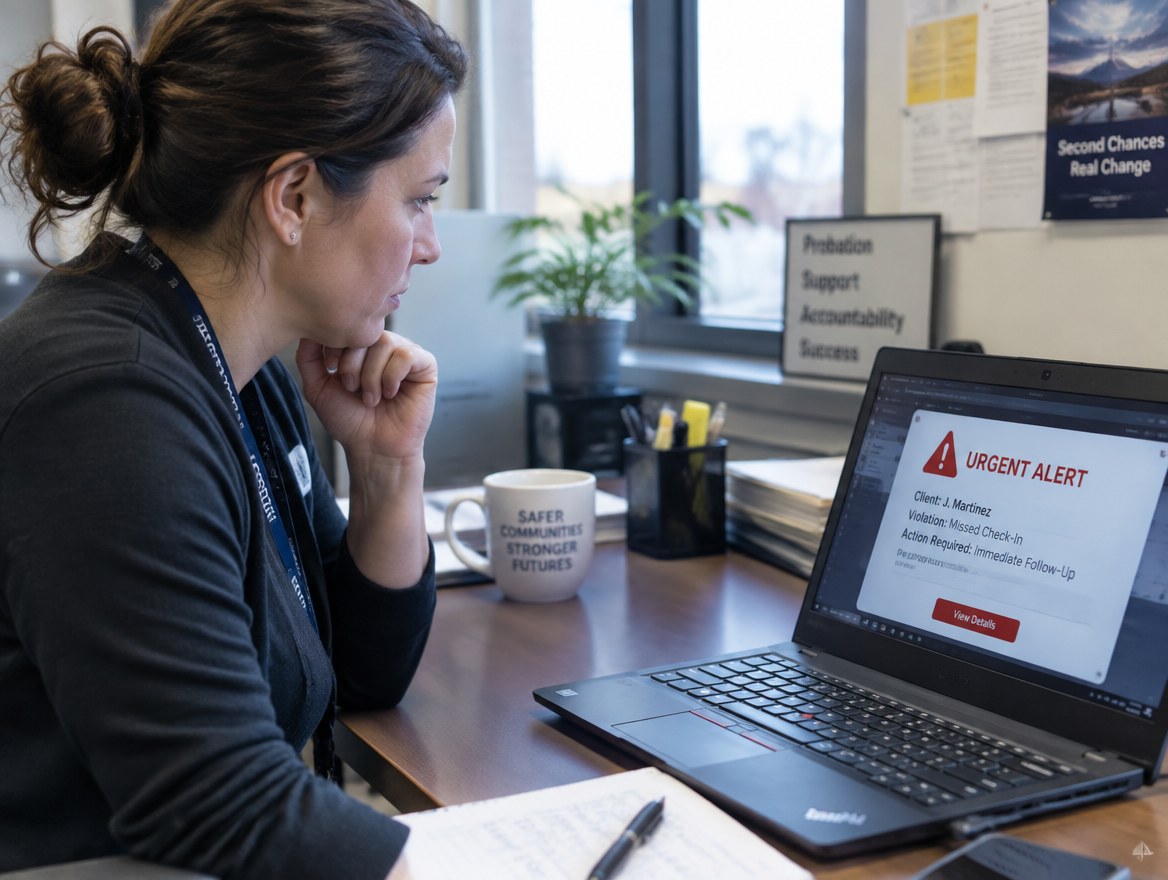
Exclusion-zone violations, tamper events, missed check-ins and positive alcohol readings arrive at a monitoring specialist's station within seconds of the device reporting them. The specialist opens the participant's profile and case rules, confirms what actually happened, and only then decides what the event deserves. Average response on an alert is under 60 seconds — and there is a person on the other end of it.
Escalation follows your rules
Most events do not need an officer woken at 3 a.m. Your program sets the path: some alerts page the assigned officer immediately, others hold for the morning review, others are logged for the compliance file. Every shift applies those rules the same way, so officers hear about what they asked to hear about — and nothing else.
Redundancy behind the scenes
- Always staffed — three shifts, every day of the year, with no single point of failure.
- Backup power and connectivity — the facility is built to stay online through outages that would take a smaller operation offline.
- Documented every step — every action a specialist takes on an alert is logged to the same audit trail that ends up in your compliance reports.
The record you actually use
By the time your team opens the dashboard, the alert, the specialist's confirmation and any officer notification are already on the participant's timeline. One click turns that record into a court-ready compliance report, so nobody reconstructs events from memory or from scattered email threads.
"People assume 'monitoring center' means an app pinging a server somewhere. It's a room full of people whose job is watching your caseload." — Monitoring Center Shift Lead, Guardian GPS
See the monitoring center's workflow firsthand
Ask us for a walkthrough of how an alert moves from device to specialist to your officers.
Guardian GPS Team
Product updates and field notes from the people building Guardian GPS Monitoring.