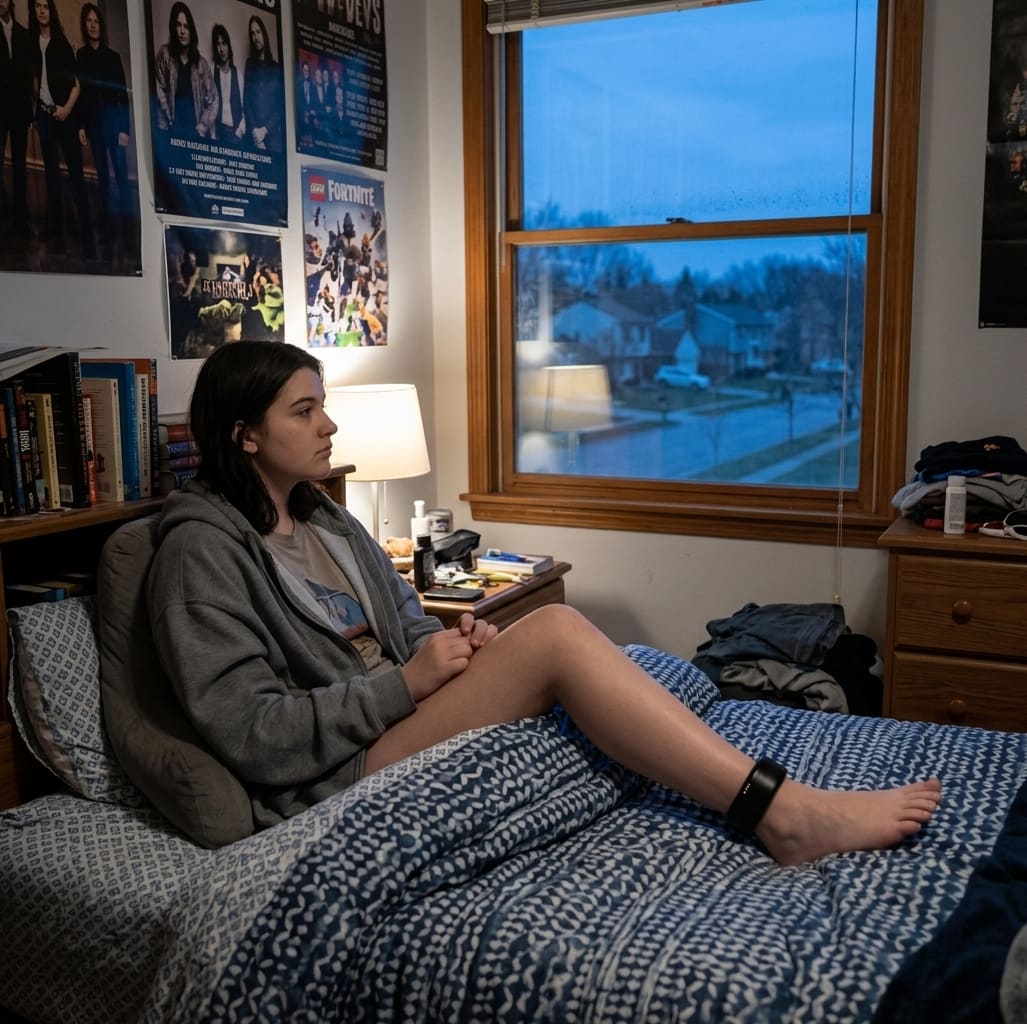
There is no distance limit built into a GPS ankle monitor. It reports your location every 30 seconds wherever there is coverage. Your real limits come from the rules your court or officer sets: inclusion zones, exclusion zones, curfew windows and approved locations. Anything outside those needs permission first.
Rules are set by your court or supervising officer. If anything here differs from what they told you, follow their instructions.
The device can go anywhere. Your rules decide where you can go.
The X14 fixes its position to within 3 to 5 meters and reports over two cellular networks, switching automatically if one drops. If you end up somewhere with no signal at all, it stores up to 72 hours of location history and sends it as soon as the signal returns. Leaving coverage doesn't hide where you went. It only delays the report.
So the useful question isn't how far the monitor reaches. It's what your conditions allow.
The four rules that set your boundaries
- Inclusion zones: places you must stay in, like your home after curfew or your workplace during set hours. Leaving one sends an alert.
- Exclusion zones: places you must stay away from, like a protected person's home or a specific neighborhood. Entering one sends an alert.
- Curfew windows: the hours you must be at an approved location, usually home.
- Approved locations: work, school, medical appointments and other regular stops your case manager adds alongside your home address.
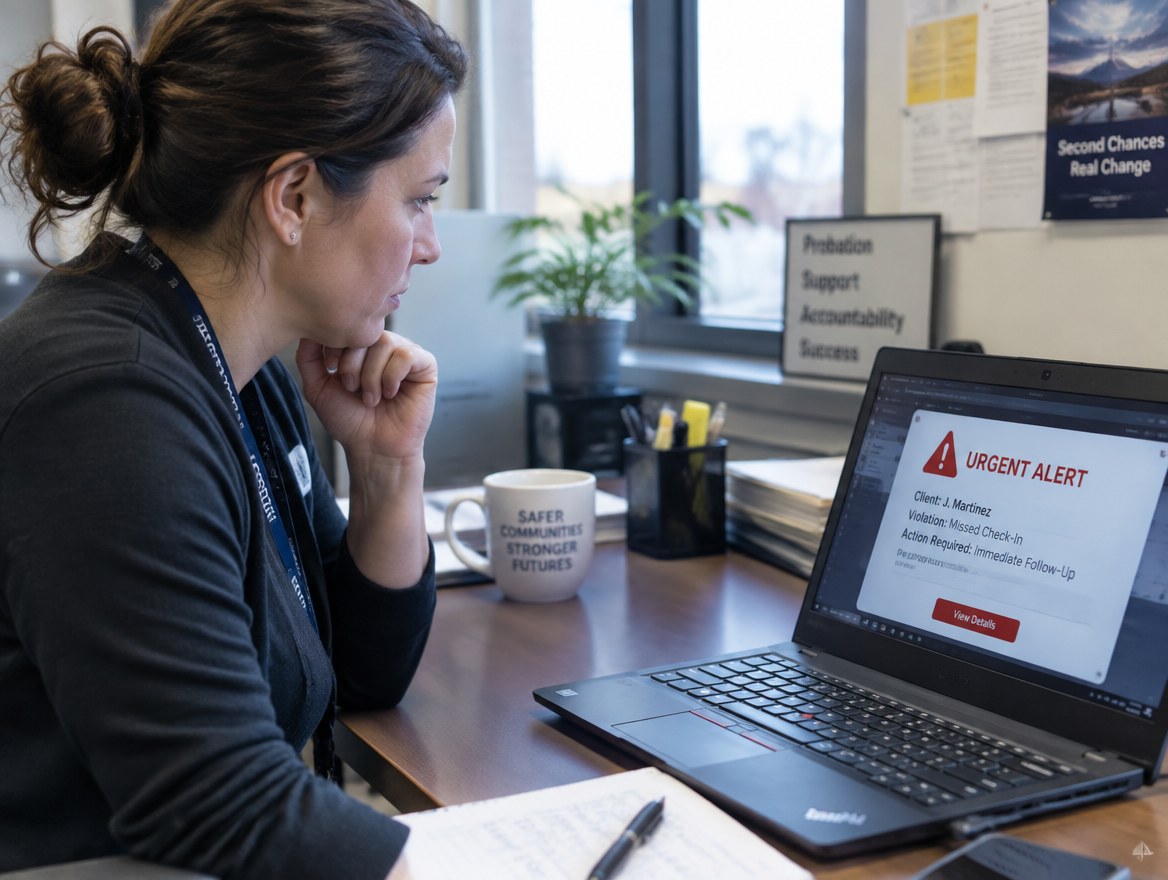
Every location report is checked against these rules automatically. A break goes straight to your assigned officer, on average in under 60 seconds. Our guide to exclusion zones and violation alerts shows exactly how a zone is drawn and what happens when one is crossed.
Home detention or curfew: how much freedom do you have?
It depends on which program you're in. On electronic home detention you stay at your residence for the confinement periods the court orders, leaving only for approved stops such as work or medical visits. On curfew monitoring you're generally free during the day but must be at an approved location during your curfew window. Pretrial and probation conditions vary from case to case, so check yours.
Can you leave town or the state?
Only with permission. Travel outside your approved zones requires prior authorization from your officer or case manager. Ask before you go, not after. Once a trip is approved, your zones and schedule can usually be updated in the platform the same day.
Guardian GPS monitoring covers all 50 states, so the device keeps working wherever you're approved to be. Whether you're allowed to go is the court's decision, not the device's. Driving is generally fine as long as you stay within your approved area and schedule.
Getting a trip approved
- Ask as early as you can, with the dates, addresses and the reason: work, a medical appointment, a family emergency.
- Keep a record of the approval: a text, an email or a note of who approved it and when.
- Charge the device fully before you leave and take the charger. The battery lasts about 5 days.
- Leave a little slack in your schedule so traffic doesn't push you past a curfew.
What if you go somewhere you shouldn't?
The alert goes to your officer, with a monitoring center specialist standing by. What happens next is up to your officer or court. If you realize you've crossed a boundary by mistake, such as a wrong turn or a detour, contact your officer right away rather than waiting to be asked. Our guide to what counts as an ankle monitor violation covers the alert process in detail.
Frequently asked questions
Is there a distance limit on an ankle monitor?
No. A GPS ankle monitor works anywhere with cellular coverage and stores up to 72 hours of location history when there is none. Your limits come from the zones, curfew and approved locations your court or officer sets.
Can I leave the state with an ankle monitor?
Only with prior authorization from your officer or case manager. Guardian GPS monitoring covers all 50 states, but whether you may travel is decided by your court or officer.
Does an ankle monitor work without cell service?
Yes. It stores up to 72 hours of location history on the device and sends it as soon as the cellular signal is restored. It also switches between two networks to reduce coverage gaps.
Can I go to work while on an ankle monitor?
Usually, yes. Your case manager can add your workplace as an approved location with set hours. Driving is generally fine within your approved area and schedule.
What happens if I enter an exclusion zone?
The platform flags the crossing and alerts your assigned officer, on average in under 60 seconds. If it was a mistake, contact your officer right away.
Questions about home detention?
See how approved locations, curfews and alerts work together.

Guardian GPS Team
Product updates and field notes from the people building Guardian GPS Monitoring.